Key Takeaways
- FBAR (FinCEN Form 114) is mandatory when aggregate foreign account balances exceed USD 10,000 at any point during the year.
- Form 8938 (FATCA) has higher thresholds and is filed with Form 1040, but many clients must file both FBAR and 8938.
- FBAR penalties can reach USD 10,000 per non-willful violation and the greater of USD 100,000 or 50% of balance for willful cases.
- Indian assets like NRE/NRO accounts, fixed deposits, and demat accounts frequently trigger reporting.
- Currency conversion must use US Treasury year-end exchange rates, not bank averages.
- Streamlined Filing Compliance Procedures offer relief for non-willful failures, covering 3 years of returns and 6 years of FBARs.
Introduction
For Indian Chartered Accountants building or scaling a US tax practice, FBAR and FATCA compliance has become unavoidable. US citizens, green card holders, and residents with ongoing ties to India routinely hold bank accounts, investments, and family-linked assets that trigger complex foreign reporting obligations.
What makes FBAR and FATCA especially risky is not complexity alone, but the penalty asymmetry. Even technically minor or non-willful omissions can result in five-figure penalties. From a practice perspective, this also represents an opportunity to position FBAR/FATCA as a high-value, defensible compliance service rather than an afterthought.
This guide is written practitioner-to-practitioner. It explains how to identify reportable Indian assets, distinguish FBAR from Form 8938, manage penalties, and remediate past non-compliance using streamlined procedures. We also address India-specific nuances—signature authority in family structures, INR conversion, and emerging crypto risks—so you can advise clients with confidence.
What Is FBAR (FinCEN Form 114)?
Legal Basis Under the Bank Secrecy Act (BSA)
FBAR arises under the Bank Secrecy Act, administered by FinCEN, not the IRS. Its purpose is to give US authorities visibility into foreign financial accounts held or controlled by US persons.
What Counts as a Foreign Financial Account
A foreign financial account includes bank accounts, fixed deposits, securities accounts, mutual funds, and certain insurance products held outside the US. Indian savings accounts, NRE/NRO accounts, and demat accounts are common triggers.
Who Must File FBAR
US citizens, green card holders, and US tax residents must file if they have a financial interest or signature authority over foreign accounts.
FBAR Reporting Thresholds
The threshold is USD 10,000 aggregate across all foreign accounts at any point during the year, not per account.
Deadline and Filing Method
FBAR is filed electronically via the FinCEN BSA E-Filing System for FBAR. The due date is April 15 with an automatic extension to October 15.
Practitioner Tip: FBAR is not filed with the tax return. Many errors occur when clients assume Form 1040 disclosure is sufficient.
India-Specific FBAR Nuances Accountants Must Know
Common Indian Accounts Triggering FBAR
Indian savings accounts, salary accounts, NRE/NRO accounts, fixed deposits, recurring deposits, and demat accounts all count. PPF and EPF are generally excluded as they are considered social security-type arrangements.
Signature Authority Accounts in India
Signature authority is common in Indian family structures. A US person who can operate a parent’s or family business account must report it even without ownership.
Multi-Currency and INR Conversion Rules
All balances must be converted using the US Treasury year-end exchange rate. Do not use average bank rates. Use the highest balance during the year.
Joint Accounts With Family Members
Each US person reports the full maximum balance, not their proportional share.
Practitioner Tip: Maintain a standardized INR-to-USD conversion worksheet to reduce review risk.
What Is FATCA and Form 8938?
Purpose of FATCA
FATCA is an IRS enforcement regime designed to identify offshore assets. Unlike FBAR, it is embedded in the income tax system.
What Are Specified Foreign Financial Assets
These include foreign bank accounts, securities, partnership interests, and certain foreign pensions.
Who Must File Form 8938
US individuals meeting the threshold must file. Many resident taxpayers with Indian assets qualify.
Filing Thresholds for Different Taxpayers
Thresholds vary by filing status and residency, and are significantly higher than FBAR.
Where Form 8938 Is Filed
Form 8938 is filed with Form 1040. See the IRS overview of FATCA reporting requirements.
Practitioner Tip: FATCA focuses on asset value at year-end, unlike FBAR’s peak-balance test.
FBAR vs FATCA (Form 8938): Side-by-Side Comparison
| Criteria | FBAR | Form 8938 |
|---|---|---|
| Authority | FinCEN | IRS |
| Threshold | USD 10,000 aggregate | USD 50,000+ |
| Filed With | FinCEN portal | Form 1040 |
| Accounts vs Assets | Accounts only | Accounts + assets |
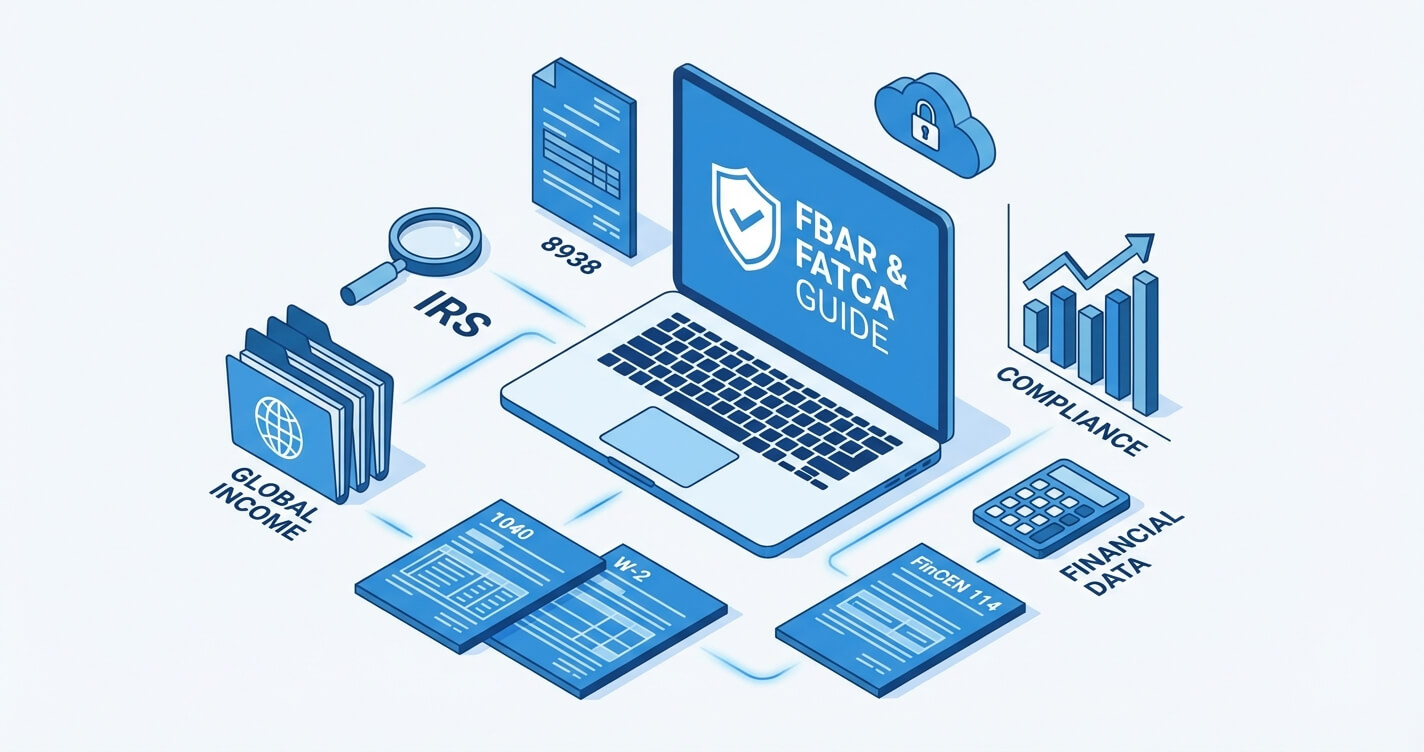
Clients often must file both. Filing one does not substitute the other. For deeper dives, see FBAR filing requirements thresholds deadlines and Form 8938 FATCA reporting requirements.
Penalties for FBAR and FATCA Non-Compliance
FBAR Non-Willful Penalties
Up to USD 10,000 per violation.
FBAR Willful Penalties
The greater of USD 100,000 or 50% of account balance per year.
Form 8938 FATCA Penalties
USD 10,000 initial penalty, escalating to USD 50,000.
Criminal Exposure Scenarios
Willful concealment can lead to criminal charges.
Practitioner Tip: Document non-willful intent contemporaneously.
Streamlined Filing Compliance Procedures Explained
Who Qualifies for Streamlined Procedures
Non-willful taxpayers with missed filings.
Streamlined Domestic vs Foreign Offshore
Foreign offshore procedures often apply to India-based residents.
Forms and Years Covered
3 years amended returns, 6 years FBARs.
When Streamlined Is Not Enough
Willful indicators require legal escalation.
Special Topics: Crypto, Indian FFIs, and Emerging Risks
Crypto and Digital Assets Under FBAR/FATCA
Direct wallets are currently excluded, but exchange-held accounts may trigger FBAR.
FATCA Compliance for Indian Financial Institutions
Indian banks report under the India-US FATCA IGA, increasing detection.
Future Enforcement Trends
Automation and data sharing are expanding.
How Indian Accounting Firms Can Operationalize FBAR & FATCA
Document Collection Challenges
Indian bank statements and family accounts require structured questionnaires.
Review and Validation Best Practices
Dual-review and standardized checklists reduce penalties.
Scaling FBAR/FATCA Without Hiring
Many firms partner with white-label platforms like FlowTax.ai to scale without adding headcount.
Conclusion
FBAR and FATCA compliance is no longer optional for Indian CAs serving US clients. The rules are technical, penalties are severe, and India-specific nuances amplify risk. Firms that systematize identification, reporting, and remediation can convert compliance risk into a profitable service line.
As you build US tax capabilities, focus on standardized data collection, clear FBAR vs FATCA analysis, and documented intent. Strategic use of automation or white-label support can help you scale confidently while maintaining control and quality.
FAQs
Do Indian NRE accounts require FBAR reporting?
Yes. NRE accounts are foreign financial accounts and must be reported if thresholds are met.
Is EPF reportable under FBAR?
Generally no, as it is treated like social security, but facts should be reviewed.
Can a client rely on Form 8938 instead of FBAR?
No. FBAR and FATCA are separate obligations.
How is INR converted for FBAR?
Using the US Treasury year-end exchange rate.
Are joint family accounts reported proportionately?
No. The full balance is reported.
Does signature authority without ownership trigger FBAR?
Yes, unless a specific exemption applies.
Are Indian mutual funds reportable?
Yes, typically through the underlying account.
Does crypto held on Indian exchanges trigger FBAR?
Potentially, if treated as a financial account.
When should streamlined procedures be avoided?
When facts indicate willful non-compliance.
How can firms scale FBAR reviews efficiently?
Through standardized workflows and white-label compliance support.